So, I was watching the film version of The Crucible, and two quotes from the play literally leapt out at me. These quotes may help you compose your conclusion paragraphs.
At the very end of Act II, after Elizabeth is taken away, Proctor says:
"Now Hell and Heaven grapple on our backs, and all our old pretense is ripped away--make your peace! Peace. It is a providence, and no great change; we are only what we always were, but naked now."
Proctor is directly addressing the duality of the people of Salem. In his opinion, the trials have removed "pretense," faked outer personas, and revealed the true inner feelings of the townspeople: envy, resentment, jealousy, lust, et al. In a strange way, he almost seems relieved that he can stop pretending to be a morally upright man.
Proctor is self-aware; Danforth, the "hanging judge," is decidedly not so. He too feels that the trials have removed the "pretense"; but unlike Proctor, he actually believes that there are witches in the town. In Act III, he proclaims:
"This is a sharp time, now, a precise time--we live no longer in the dusky afternoon when evil mixed itself with good and befuddled the world."
A strict Puritan, Danforth is relieved at the prospect of ending a period of duality.
I hope these help. I will continue to check my email until about 10:00 PM.
Good luck, all!
Thursday, October 2, 2014

Sunday, September 28, 2014
Plans for the Week: 9/29-10/3

The Crucible
Requirements:
- 15 questions, 15 answers -
- 10 questions must address or include a specific quote from the text;
- 2 questions must refer to 2 separate AP Lang. devices;
- 3 questions may refer to simple plot comprehension, i.e. they need not include a quote from the text;
- Each question must also include a detailed answer.
- You may work in groups of 2-3
- We will be in the library on Thursday and Friday
- Completed questions are due by the end of class on Friday (10/3)
- Questions must be typed; a hard copy must be submitted with all group members' names
Independent Writing
The Prompt: In his notes for his play, The Crucible, Arthur Miller wrote, "The concept of unity, in which positive and negative are attributes of the same force, in which good and evil are relative, ever-changing, and always joined to the same phenomenon--such a concept is still reserved to the physical sciences and to the few who have grasped the history of ideas." Miller implies that humanity has a difficult time understanding that good and evil can actually stem from the same source. The characters in The Crucible demonstrate this duality. Write an expository essay in which you analyze how two characters from the play demonstrate duality. Assess the difference between actual intention and the perception of the characters' actions. Support your analysis with specific references to the play.
- In other words, you are analyzing the discrepancy between the appearance of two characters' actions and their actual motivations/desires, or the irony of the separation between intent and result.
- For example, on the surface, Abigail pretends to be concerned with identifying witch-craft and devil worship, but she actually has concocted an elaborate plan to drive John Proctor back into her arms.
- Reverend John Hale believes he is combatting the forces of evil, but he is actually simply fueling into murderous revenge fueled by jealousies and pre-existing conflicts.
Due Tuesday (9/30): Completed thesis statement
- This does not need to be typed.
- 4 paragraphs
- A clearly defined thesis; it must appear as the last sentence(s) of the introductory paragraph
- Two body paragraphs containing specific references to the play
- A conclusion
- Incorporate Transitions/transition words
- Avoid using any first person pronouns: I, Me, My, Mine, etc.
- Avoid using the second person: you; try to use "one" or another non-specific pronoun
- No contractions: can't, won't, don't, etc.
- Size 12 Times New Roman
- Double-spaced
Typed, Completed essays are due by Friday, October 3rd.
Independent Vocabulary Work
Due Monday (10/6): 15 original, thoughtful sentences that correctly use the lesson 2 vocabulary terms.
You may even opt to write a short story. Please make me laugh. Good luck.
Wednesday, September 24, 2014
The Crucible: Act II
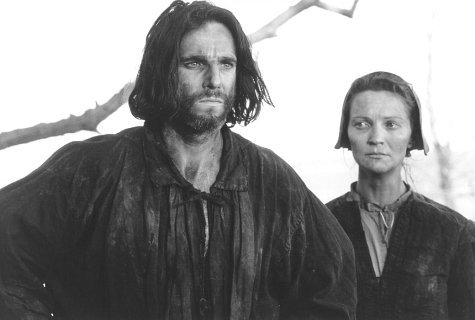 |
| "Oh, Elizabeth, your justice would freeze beer!" |
In lieu of reading Act II together, you will all be responsible for reading it on your own and creating study guide questions and answers.
Requirements:
- 15 questions, 15 answers -
- 10 questions must address or include a specific quote from the text;
- 2 questions must refer to 2 separate AP Lang. devices;
- 3 questions may refer to simple plot comprehension, i.e. they need not include a quote from the text;
- Each question must also include a detailed answer.
- You may work in groups of 2-3.
- Completed questions are due by the end of class on Friday (9/26)
- Questions must be typed; a hard copy must be submitted with all group members' names
Monday, September 22, 2014
The Psychological Power of the Devil
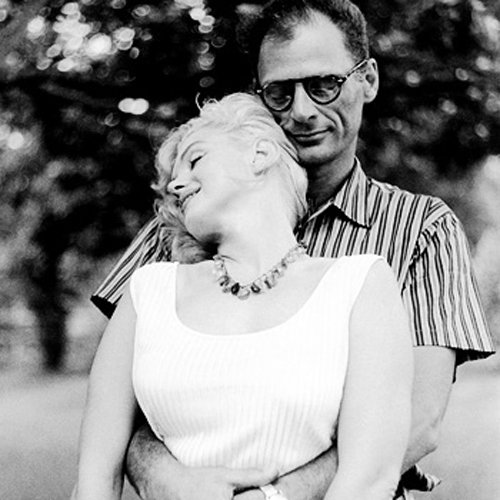 |
| Pictured: Arthur contemplating metaphysical truths regarding religion and human behavior. And , Marilyn Monroe |
In Act I of The Crucible, Arthur Miller writes:
"The concept of unity, in which positive and negative are attributes of the same force, in which good and evil are relative, ever-changing, and always joined to the same phenomenon--such a concept is still reserved to the physical sciences and to the few who have grasped the history of ideas."
In laymen's terms, humanity tends to gravitate towards a view of good and evil in which the former is embodied by God and the latter is the work of the Devil. To Miller, a man all too familiar with persecution, the Devil can be used as a tool to control and demonize one's enemies.
Miller phrases this idea succinctly: "A political policy is equated with moral right, and opposition to it with diabolical malevolence."
The Puritans needed the Devil; their world of faith and suffering would almost be too much to bear without him.

But do modern Americans still need him?
Today, we can view the Puritan concept of the Devil under the lense of psychology and a scientific understanding of the brain and human behavior.
This is an idea more fully explored in the following article posted on Scientific American: "The Psychological Power of Satan." The author argues against the traditional view of the Devil and evil.
Your Assignment:
- Read the article and post a comment on this blog post.
- What does the article have to do with The Crucible? Does it help you make sense of the Miller quote at the beginning of this post?
- What do you make of the author's view of the Devil and evil? Is it a good or bad thing to abandon the concept of "evil" and replace it with a more psychologically sensitive view? Explain.
Your responses are due before class on Thursday, September 25th.
Wednesday, September 17, 2014
Last year, Slate Magazine posted a humorous and telling article concerning some of the most unsual and occasionally downright spiteful Puritan names of yesteryear: "A Boy Named Humiliation". If this article sparks your interest, feel free to check out Curiosities of Puritan Nomenclature, a comprehensive study of Puritan naming practices published in 1888.
But what about your name? What does it mean? What does it reveal about you and your relationship to your family?
Please research the meaning of your own name using the Behind the Name website. If your first name does not deliver any results, try your last name, or ask your family members what the name means to them.
In the comment section of this post, respond to the following:
My Response:
Regarding the Puritan names, one name in particular doesn't stand out. Rather, I am disgusted by the cruel, depressing names given to children.
Forsaken? Were these poor people robbed of all joy? Children were indoctrinated at birth: life is constant struggle and suffering.
Now, my name.
I am named after my mother's father, Edward Earle Allen. Interestingly enough, my father picked the name.
Admittedly, I am not crazy about the name Edward. However, I admire the man that I was named after.
Also, I don't think anyone regularly calls me Edward.
Ed, Eddie, Eduardo, Edsel--these are all more common.
Alright, your turn, people.
But what about your name? What does it mean? What does it reveal about you and your relationship to your family?
Please research the meaning of your own name using the Behind the Name website. If your first name does not deliver any results, try your last name, or ask your family members what the name means to them.
In the comment section of this post, respond to the following:
- Select what you feel is the most memorable Puritan name from the article from Slate Magazine and explain what the name reveals about the Puritan culture.
- Finally, explain the significance of your own first or last name. Please include information you find from Behind the Name or from your own research.
Responses are due prior to class on Monday (9/22).
Regarding the Puritan names, one name in particular doesn't stand out. Rather, I am disgusted by the cruel, depressing names given to children.
Forsaken? Were these poor people robbed of all joy? Children were indoctrinated at birth: life is constant struggle and suffering.
Now, my name.
I am named after my mother's father, Edward Earle Allen. Interestingly enough, my father picked the name.
 |
| Pictured: My mother, the little girl, my two uncles, my grandmother, and my grandfather, Earle (1953). |
Also, I don't think anyone regularly calls me Edward.
Ed, Eddie, Eduardo, Edsel--these are all more common.
Alright, your turn, people.
Sunday, June 15, 2014
A Sound Heart Versus A Deformed Conscience
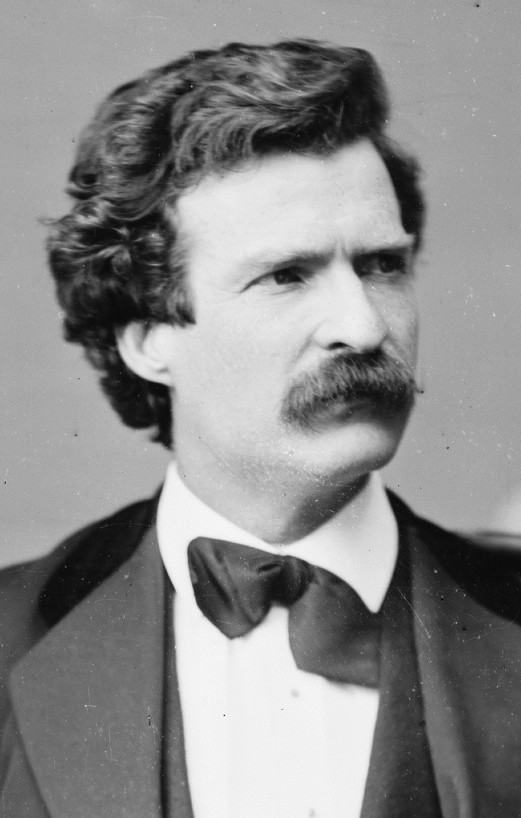
As we discussed in class, to Twain, the conscience represents the morality one ascertains from society; the heart represents an individual's moral voice, an instinct if you will.
Twain, an American writer, values individualism. Hopefully you see a connection here.
 |
| "Society! Society! Society!" |
We have read The Crucible, Thoreau's transcendental writings, and watched a harrowing account of the last adventures of young Chris McCandless. Hopefully you have learned something about yourselves, America, literature, society, and writing.
Please reflect.
Peace, love, and bacon grease. It's been a pleasure, all.
Subscribe to:
Posts (Atom)