Arthur Miller
 |
| Horror author? |
"...the people of Salem developed a theocracy, a combine of state and religious power whose function was to keep the community together, and to prevent any kind of disunity that might open it to destruction by material or ideological enemies. It was forged for a necessary purpose and accomplished that purpose. But all organization is and must be grounded on the idea of exclusion and prohibition..."
Let us remember: the Puritans were fighting to survive in the harsh environment that was the Massachusetts Bay Colony in the 17th century. As Miller puts it, "...the people were forced to fight the land like heroes for every grain of corn, and no man had very much time for fooling around."
Thus, it was literally conform or die in those days.
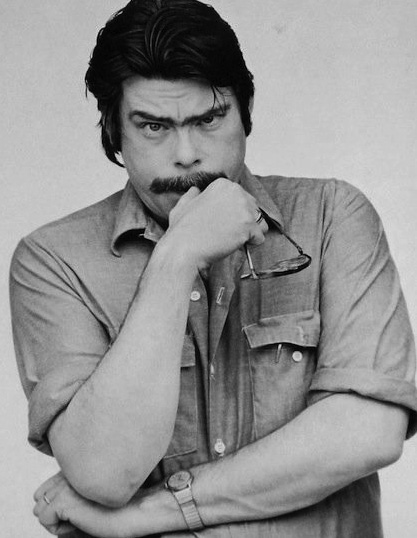
In his book of essays on horror, Danse Macabre, Stephen King writes: "The writer of horror fiction is neither more nor less than an agent of the *status quo."
- *status quo: a Latin phrase which as come to mean, "the way things currently are"
He explains this idea more fully:
"We love and need the concept of monstrosity because it is a reaffirmation of the order we all crave as human beings... and let me further suggest that it is not the physical or mental *aberration in itself which horrifies us, but rather the lack of order which these aberrations seem to imply."
- *Aberration: a departure from what is normal.
Thus, in the days of the Puritans, aberrations were frightening because they were literally associated with death. However, King argues that we continue to be frightened by aberrations and anything that interrupts the status quo.
In his essay, "Are you Now or Were You Ever," Arthur Miller describes the fear of Communism as a "free-floating apprehension." In my opinion, Americans in the 1950's feared Communism because they felt that it was an invisible, intangible force that possessed the power to transform their loved ones into enemies--a force akin to the corrupting power of the devil in 1692.
Your Task: Respond to each of the following four questions in a response posted to this blog post. Your responses must be posted before class on Monday (10/27).
In his essay, "Are you Now or Were You Ever," Arthur Miller describes the fear of Communism as a "free-floating apprehension." In my opinion, Americans in the 1950's feared Communism because they felt that it was an invisible, intangible force that possessed the power to transform their loved ones into enemies--a force akin to the corrupting power of the devil in 1692.
Your Task: Respond to each of the following four questions in a response posted to this blog post. Your responses must be posted before class on Monday (10/27).
- Do we continue to be frightened by aberration in America--is this still reflected in contemporary horror? Give me an example.
- Does this idea of aberration help to explain the underlying terror portrayed in The Invasion of the Body Snatchers? Explain.
- How did this same sense of fear affect the Puritans in Salem, Massachusetts?
- Why do you think that I elected to show The Invasion of the Body Snatchers in conjunction with The Crucible?