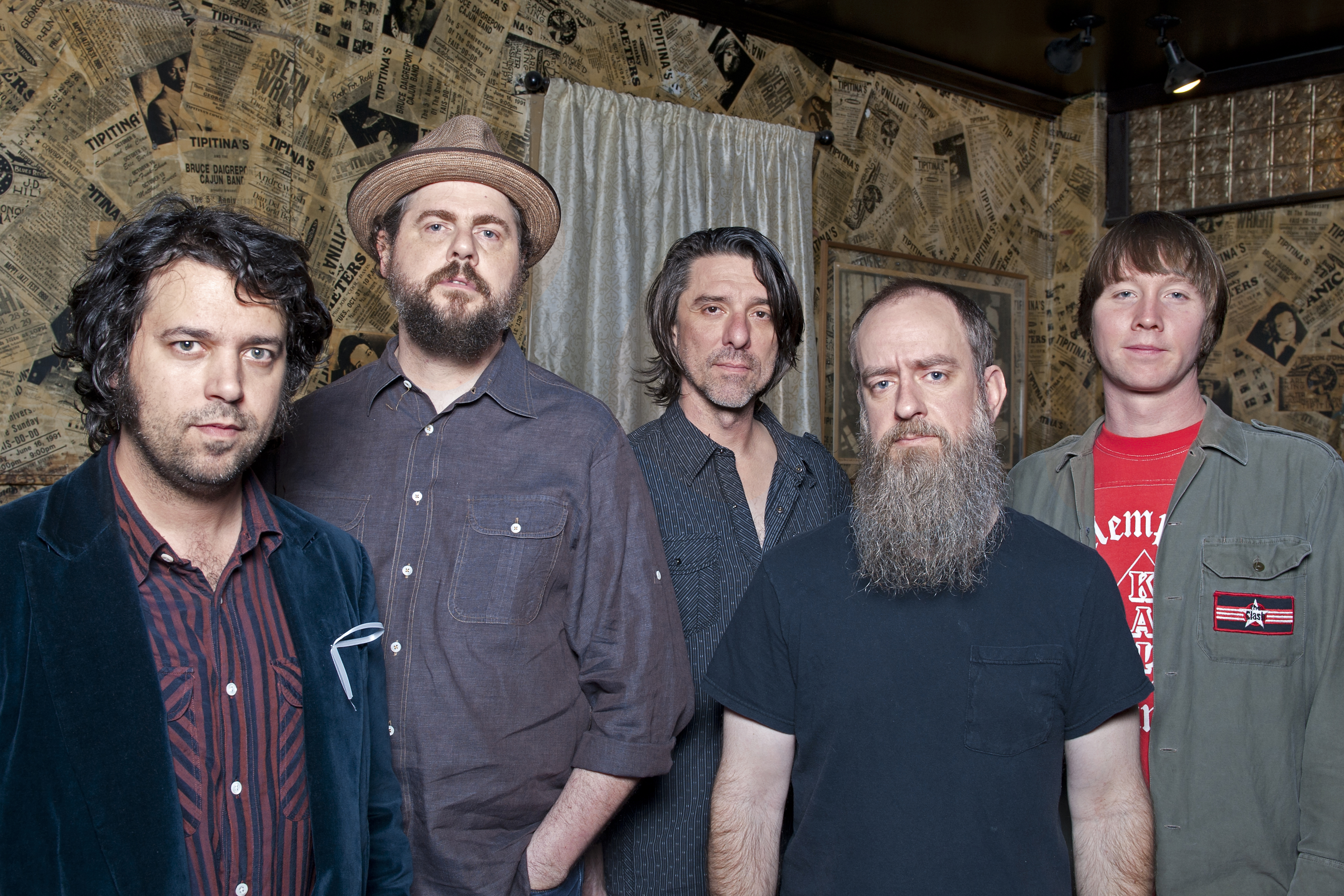
"Americana" is the name given to a genre of music that is uniquely American. It is equal parts rock and roll, blues, country, soul, rhythm and blues, folk, and jazz. One of the very first groups to be recognized as Americana is The Band.
Yes, that's their name: The Band. They also happen to be my favorite band of all time. Their rise to fame actually began in Somers Point, NJ. During the summer of 1965, the Canadian group (sans singer/drummer and Arkansas native, Levon Helm), then known as Levon and the Hawks, was hired as the house band at Tony Mart's, a music club in Somers Point.
 |
| http://www.tonymart.com/memory-lane-1965.htm |

Levon and the Hawks eventually became The Band, a joke name of sorts (No artist name is listed on their debut LP, and their first proposed name--"The Crackers"--was shot down by their label).
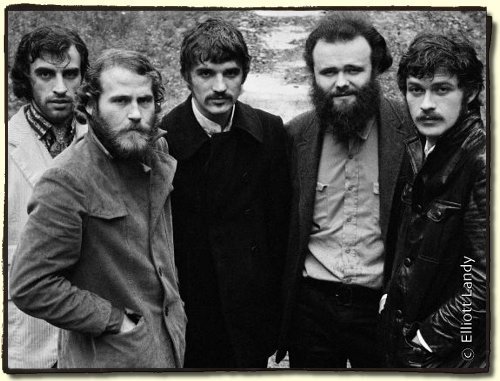
Their debut album, Music From Big Pink, contained a rendition of a classic country song initially made famous by Lefty Frizzell: "The Long Black Veil.
The song explores guilt, shame, and all of that emotional, Puritan baggage that is just so American.
Ten years ago on a cool dark night
There was someone killed 'neath the town hall light
There were few at the scene and they all did agree
That the man who ran looked a lot like me
The judge said "Son, what is your alibi?
If you were somewhere else then you won't have to die"
I spoke not a word although it meant my life
I had been in the arms of my best friend's wife
She walks these hills in a long black veil
She visits my grave where the night winds wail
Nobody knows, no, and nobody sees
Nobody knows but me
The scaffold was high and eternity neared
She stood in the crowd and shed not a tear
But sometimes at night when the cold wind moans
In a long black veil she cries over my bones
There was someone killed 'neath the town hall light
There were few at the scene and they all did agree
That the man who ran looked a lot like me
The judge said "Son, what is your alibi?
If you were somewhere else then you won't have to die"
I spoke not a word although it meant my life
I had been in the arms of my best friend's wife
She walks these hills in a long black veil
She visits my grave where the night winds wail
Nobody knows, no, and nobody sees
Nobody knows but me
The scaffold was high and eternity neared
She stood in the crowd and shed not a tear
But sometimes at night when the cold wind moans
In a long black veil she cries over my bones
While we are on the subject of American music, let us also consider a true icon: Johnny Cash. Here is his "theme" song, "The Man in Black."
Well, you wonder why I always dress in black,
Why you never see bright colors on my back,
And why does my appearance seem to have a somber tone.
Well, there's a reason for the things that I have on.
I wear the black for the poor and the beaten down,
Livin' in the hopeless, hungry side of town,
I wear it for the prisoner who has long paid for his crime,
But is there because he's a victim of the times.
I wear the black for those who never read,
Or listened to the words that Jesus said,
About the road to happiness through love and charity,
Why, you'd think He's talking straight to you and me.
Well, we're doin' mighty fine, I do suppose,
In our streak of lightnin' cars and fancy clothes,
But just so we're reminded of the ones who are held back,
Up front there ought 'a be a Man In Black.
I wear it for the sick and lonely old,
For the reckless ones whose bad trip left them cold,
I wear the black in mournin' for the lives that could have been,
Each week we lose a hundred fine young men.
And, I wear it for the thousands who have died,
Believen' that the Lord was on their side,
I wear it for another hundred thousand who have died,
Believen' that we all were on their side.
Well, there's things that never will be right I know,
And things need changin' everywhere you go,
But 'til we start to make a move to make a few things right,
You'll never see me wear a suit of white.
Ah, I'd love to wear a rainbow every day,
And tell the world that everything's OK,
But I'll try to carry off a little darkness on my back,
'Till things are brighter, I'm the Man In Black.
There's a man who walks beside me
It is who I used to be
And I wonder if she sees him
and confuses him with me
And I wonder who she's pinin' for
on nights I'm not around
Could it be the man who did the things
I'm living now?
I was rougher than a timber
shippin' out of Fond du Lac
When I headed south at 17
ol' sheriff on my back
I never held a lover in my arms or in my gaze
So I found another victim every couple days
But the night I fell in love with her
I made my weakness known
Through the fires and the farmers diggin' dusty fields alone
The jealous innuendos of the lonely hearted men
Let me know what kind of country I was sleeping in
Well you couldn't stay a loner
on the plains before the war
My neighbors had been slightin' me
I had to ask what for
Rumors of my wickedness had reached our little town
Soon she'd heard about the boys I used to hang around
We'd robbed a Great Lakes freighter,
killed a couple men or more
And I told her her eyes flickered like the sharp steel of a sword
All the things that she'd suspected
I'd expected her to fear
Was the truth that drew her to me when I landed here
There's a man who walks beside me
he is who I used to be
And I wonder if she sees him and confuses him with me
And I wonder who she's pinin' for
on nights I'm not around
Could it be the man who did the things
I'm living down?
Well I carved a cross from live oak
and a box from shortleaf pine
Buried her so deep
she touched the water table line
I picked up what I needed
and I headed south again
To myself I wondered
would I find another friend
There's a man who walks beside her,
it is who I used to be
And I wonder if she sees him and confuses him with me.
Your Task:
- Select one of the aforementioned songs.
- Explain how the song is similar to the short story "The Minister's Black Veil" and "Young Goodman Brown."
- Discuss the themes of "The Minister's Black Veil" and "Young Goodman Brown" and the theme of the song you select.
- Support your response with references to both the song and the story.
- Be original! Your response should consist of your thoughts and your feelings.
- Your response should be approximately 250 words in length (500 max).