Showing posts with label Julius Caesar. Show all posts

Thursday, February 2, 2017

Stoicism and Epicureanism

First read the following article which details  the most practical and contemporary tenets of stoicism. The article also contains the TED talk concerning the actual biochemical benefits of stress.

Me-ow. (I know, sorry.)

http://guardianlv.com/2013/11/is-stoicism-the-secret-to-happiness-video/

I also recommend watching this video in which former UFC fighter and high school math teacher, Rich Franklin, explores the benefits of learning to lose:

Yeah, so he is not losing here.


Then, peruse the information I collected regarding Stoicism and Epicureanism.
The following is a portion of the definition of Stoicism from the Stanford Encyclopedia of Philosophy:

Stoicism was one of the new philosophical movements of the Hellenistic period... The Stoics did, in fact, hold that emotions like fear or envy (or impassioned sexual attachments, or passionate love of anything whatsoever) either were, or arose from, false judgements and that the sage—a person who had attained moral and intellectual perfection—would not undergo them. The later Stoics of Roman Imperial times, Seneca and Epictetus, emphasise the doctrines (already central to the early Stoics' teachings) that the sage is utterly immune to misfortune and that virtue is sufficient for happiness. 

"...Virtue is sufficient for happiness."

Questions to consider:

  • Does this philosophy help explain the words and actions of Shakespeare's Brutus?
  • Does he consider himself to be a "sage," one immune to emotional judgments?

Consider how he responds to the death of his wife, Portia:
     Why, farewell, Portia. We must die, Messala:
     With meditating that she must die once,
      I have the patience to endure it now. [IV, iii]

Sunday, October 25, 2015

Julius Caesar Theme Analysis Essay

Julius Caesar - Theme Analysis Paper


You will all be responsible for writing a literary analysis of the William Shakespeare play, Julius Caesar. In your analysis, you will explain the ways in which the play centers around an on-going conflict between order and disorder. Your essay will explore this conflict as it is depicted in regards to the following recurring symbols/motifs::


  • Man and the Animal Kingdom
  • Blood
  • Fire
  • Time
  • Illness/Infirmity
    • Note: You pick which 3 to write about.


You need to develop a thesis statement, that is the point you will prove in your paper with analysis and cited facts. The actual thesis must appear as the final sentence in the opening paragraph. It may need to be a long, complex sentence constructed with semicolons, or multiple sentences.


Remember, a thesis is simply a viewpoint that is proven in the paper. Your viewpoint must be supported with scholarly facts and insights, i.e. the views of literary critics and meaningful references to the play itself.


Here is a sample piece of a possible thesis statement (Inspired by Sophie Ragan):
  • “The motif of time in the play is used to convey the idea that time and politics are synonymous, and Brutus’ lack of understanding of time reflects his own political naivete and malleability.”
    • Note: The aforementioned is ⅓ of a proper thesis statement; the other 2 symbols and motifs require a similar statement, i.e. things your paper will prove and substantiate with research and analysis.


You will support your analysis with:
  • Quotes and ideas stemming from the book, Julius Caesar: A Guide to the Play, by Jo McMurtry (The information needed to cite the book is available on the blog);
  • 2 scholarly Internet sources that you find on your own;
  • And multiple, specific references to the play itself.


Introduction
  • Begin the essay by discussing Stoicism and Epicureanism. These philosophies concern the crux of the play: the on-going conflict between order and disorder.
  • Look up the concepts and use a citation to support your analysis of these schools of thought.


Conclusion
  • Incorporate young adult writer Alex Bledsoe’s simple interpretation of the play. It will help you reintroduce the main idea and your thesis in a non-redundant manner: “So what, ultimately, does the 400-year-old Julius Caesar tell us? About ourselves: that in the war between passion and intellect, passion always wins.”
Suggested Outline
I. Intro
   A. Stoicism and Epicureanism: the internal, timeless struggle of order and disorder
   B. Recurring Symbols and Motifs: introduce the concepts -- blood, fire, etc.
   C. Thesis: what your paper will prove; long, complex sentence that incorporates the ideas     
        previously mentioned in the intro.
II. First symbol/motif
    A. Cited fact, quotation, or analysis
    B. Supporting/example lines from the play
    C. Your analysis/interpretation
III. Second symbol/motif
     A. Cited fact, quotation, or analysis
    B. Supporting/example lines from the play
    C. Your analysis/interpretation
IV. Third symbol/motif
    A. Cited fact, quotation, or analysis
    B. Supporting/example lines from the play
    C. Your analysis/interpretation
V. Conclusion
    A. Alex Bledsoe: Intellect v. Passion
    B. Reiteration of the thesis
VI. Works Cited


Things to remember:
  • You are responsible for uploading a completed paper to Google Classroom on time
  • Length: 4-6 pages; Double-spaced; Size 12 Times New Roman font
  • Proper MLA formatting
  • No cover page
  • Proper Header
  • a MLA-formatted Works Cited; this does not count towards the overall length of the paper


Wednesday, September 30, 2015

Brutus and Portia: Act II, Scene i


Above is the PowerPoint detailing how to compose an anecdotal introduction. The presentation also includes an outline for the entire essay.

Your Task
Rewrite your introductions, beginning with a hook or anecdote. Then, complete the first body paragraph (Logos).
  • Revised introductions and your first body paragraphs are due before class on Friday (10/2).
    • They must be shared with me via email: eclark@gehrhsd.net (Please give me the ability to edit.)
  • They must be completed via Google Docs; handwritten work will not be accepted.
The Act II study guides are also due on Friday.

Friday, September 25, 2015

Homework: Due 9/28

Portia certainly knows how to get what she wants from her man, Brutus.

Your Task

Read this AP Lang style prompt:
https://docs.google.com/document/d/1FLL7EN9BGHLolXJW3VwdZN39sefR11qUU2wJslTQrYI/pub

Consider what is asked in the prompt, and compose an introductory paragraph for the essay.

Your intro paragraph is due this Monday, Sept. 28th. 

Wednesday, May 6, 2015

Snowpiercer: Dystopia, Life, Order, and Disorder

The easiest way to interpret the film Snowpiercer is to analyze its unique visual style. The YouTube channel, "Every Frame a Painting," does a nice job of breaking the narrative down into very simple terms:


Here is a more in-depth analysis of the film:


The film is a unique take on the concept of dystopia, and it shares many things in common with both The Handmaid's Tale and The Tragedy of Julius Caesar.

The following is a list of 20 questions concerning the film, Julius Caesar, and The Handmaid's Tale. You must respond to 5 of the 20 questions in a Power Point presentation that you will present to the class.

You must select at least one question that concerns Julius Caesar and at least one question that concerns The Handmaid's Tale.

You must explain your interpretation/answer fully!

  1. Is Wilfred a bad guy?
  2. Is the train necessarily a corrupt organism? 
  3. Does the order of the train resemble the order of the natural universe? 
  4. Why do both The Handmaid's Tale and Snowpiercer begin with some sort of environmental disaster? 
  5. How is the film, Snowpiercer, similar to the play, Julius Caesar?
  6. Is Gilliam akin to Cassius?
  7. Is Curtis akin to Brutus?
  8. Is Wilfred similar to Caesar?
  9. Can a society exist without a "tail section?" 
  10. The inhabitants of the front of the train are controlled with pleasure. Is this the case in reality now? Explain how this works.
  11. Why do you think Gilliam works in conjunction with Wilfred?
  12. Does war keep the ruling class in power?
  13. Are revolutions a societal form of natural selection? 
  14. Do leaders invent conflict to control populations?
  15. Will the residents of the "tail section" ever usurp power?
  16. At the end of Snowpiercer, will a new society form that resembles the train?
  17. Is humanity simply the sum of its parts, as Wilfred implies, or do the needs of individuals truly matter?
  18. What happens in a world without leaders--without Wilfreds?
  19. What is the message of Snowpiercer?
  20. How are the residents of the "tail section" similar to the handmaids in Gilead?

We will be in the library computer lab on Thursday, May 14th and Friday, May 15th.

Your presentations must be completed by Monday, May 18th. Class presentations will then follow.

Tuesday, March 31, 2015

Group Mini-Projects

Julius Caesar Skills Mini-Project


We will be completing the Act V “Developing skills in reading literature” (page 685 in the textbook) questions in groups. Each group of 4-6 students will be responsible for fully answering one of the sections: Tragedy, Tragic Hero, Pun, Structure, and Theme. You may pick your own groups. You will be given class time to work on your projects but are also encouraged to work outside of class to accomplish your task. Each group will be expected to create a Power Point and give a presentation on your topic.


Presentations are to include the following:
  • A complete answer to each question in your section (Remember to include the question to let the audience know what you are answering)
  • Every member of the group must be included in the presentation
  • Powerpoint must include pictures, videos, or any other element which will enhance your presentation
  • Relevant reference to a scholarly source about your topic with works cited slide. For example, if you are in the Tragedy group, you would include a reference to the dictionary definition of “catharsis.”
  • Presentations are to be at least 3-5 minutes in length
  • You may facilitate a discussion with well thought out questions
  • Creativity


Presentations are due on Monday, April 6. You will be graded on the thoughtfulness of your answers, your participation in your group, and the overall impact of the presentation.

Period 1 Groups
Amara, Ryan T., Dana, Jess: Tragic Hero
Rocap, Teagen, Lindsey, Abby: Tragedy
Kassia, Erynn, Darren, Christian, Nick, Justin: Structure
Taylor, Alfonso, Joe, Brandon, Ryan K., Sam A.: Tragic Hero
Janet, Jasmine(s), Dina, Bryan: Pun

Period 2 Groups:
Tim, Caitlyn, Lucie, Melissa, Ashley: Structure
Altea, Donna, Kayla, Bre, Kennedy: Tragedy
Haley, Cynthia, Zack, Kiley, Kyle, Nathan, Jessica: Theme
Dan, Levi, Parth, Bogdan, Gabe: Tragic Hero

Tuesday, March 25, 2014

The Head Versus the Heart


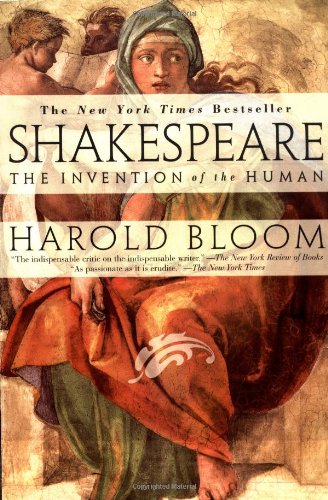
The unassuming man pictured above is legendary literary critic and Yale University professor, Harold Bloom. In the 20th century, this man has played a significant role in determining what is "literature" and what is not. In simplest terms, literature refers to works of writing that are well-constructed, timeless, and universal.

Back to Harold. This man has written volumes on William Shakespeare. One of his most interesting contributions to the on-going analysis and criticism of Shakespeare  is the following book:


The book is based around a rather radical idea. The following is a brief excerpt from the Amazon.com summary:

At the same time, Bloom presents one of the boldest theses of Shakespearean scholarships: that Shakespeare not only invented the English language, but also created human nature as we know it today.

The following is one of Mr. Costal's favorite questions.

Does art imitate life or does life imitate art?

Bloom subscribes to the latter perspective.

Wednesday, March 12, 2014

"For I have neither wit, nor words, nor worth, Action, nor utterance, nor the power of speech, To stir men's blood"

Caesar was told, "Beware the Ides of March." Currently, our nation's leader is anxiously anticipating March 31st: the deadline for enrollment in the Affordable Care Act. The Obama administration hopes to have 6 million Americans enrolled prior to this date, and preferrably, 6 million young Americans. Currently, approximately 4.2 million Americans are enrolled--it's crunch time.

Let's read a bit about this deadline:
http://www.cleveland.com/open/index.ssf/2014/03/affordable_care_act_enrollment.html

Now, as you most likely know, President Obama recently appeared on the Funny or Die program, "Between Two Ferns," hosted by Zach Galifianakis of Hangover fame. Let's watch the interview.


http://www.youtube.com/watch?v=UnW3xkHxIEQ

Now, what is the President's purpose in doing this interview? 
Is this the type of video that will appeal primarily to a younger demographic? 
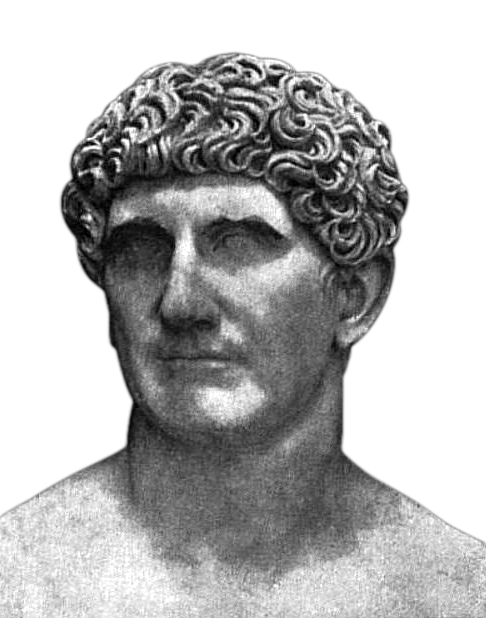
Is President Obama in any way similar to Mark Antony? 
Is there an ironic gap between his public persona and his actual political agenda?


How many ages hence
Shall this our lofty scene be acted over
In states unborn and accents yet unknown!

Let's discuss.  

Tuesday, March 11, 2014

The Inherent Irony of Antony's Speaking Persona

     It [the body of Caesar] is, indeed, now a religious relic that is being displayed to call for its own intensity of responding feeling. The response comes in broken exclamations, which stand out against the wonderfully facile flow of what has gone before , and leads finally to the sinister call for death and revenge: "Revenge! About! Sack! Burn! Fire! Kill! Slay!" To the last Antony follows his method of inciting his hearers by disclaiming the very ends he has in mind. He begs them not to be stirred up to "such a sudden flow of mutiny." Caesar's assassins are beyond understanding of one who is, like those who hear him, "a plain blunt man,"
    That love my friend: and that they know full well
    That gave me public leave to speak of him. [III. ii.]
It is essential to the irony which prevails at this point that this, in part, is precisely what Antony is: though it is equally true that the conscious orator in him, in asserting this "plainness," is using it for calculated ends. His self-assumed part is that of one who has
          neither, wit, not words, nor worth,
      Action, nor utterance, nor the power of speech,
      To stir men's blood, [III. ii.]


The aforementioned excerpt is from the essay, "A Clash of Aims: The Use and Abuse of Oratory by Brutus and Antony," by noted literary critic, Derek Traversi. What follows is the proper MLA citation for the book in which the essay appears:

Traversi, Derek. "A Clash of Aims: The Use and Abuse of Oratory by Brutus and Antony." Readings on Julius Caesar. Ed. Don Nardo. San Diego: Greenhaven Press, Inc., 1999. 131-137. Print.

To correctly cite the essay using MLA format, I checked Purdue University's Online Writing Lab. I searched for books, then found the sample for books containing multiple essays by multiple authors. Here is a link to the site: https://owl.english.purdue.edu/owl/resource/747/06/ Scroll down to the section titled,  "A Work in an Anthology, Reference, or Collection" to see a sample citation.

I then used the following pages from the book to create the citation.


Now, to cite a quote or idea from the excerpt from the essay, you can simply mention the author and the essay by title. This is called an in-text citation (It is very necessary).

You can either mention the author and the essay:
  • In his essay, "A Clash of Aims: The Use and Abuse of Oratory by Brutus and Antony," literary critic Derek Traversi postulates... (136).
Or you can simple include a parenthetical citation:
  • Mark Antony adopts an ironic speaking persona (Traversi 136).
In this case, I feel that the first example is less awkward; plus, the mention of a published literary critic lends academic merit to your analysis.

***
Here's what I'd like you all to do:
  • Read the excerpt.
  • Analyze the irony of Antony's speaking persona--what's ironic about Antony's funeral oration?
  • Support your analysis with a quote from the essay (a proper in-text citation is required), and at least 2 quotes from the play itself (see p. 650-653); do not use any play quotes from the essay excerpt.