Thursday, March 13, 2014

Wednesday, March 12, 2014
"For I have neither wit, nor words, nor worth, Action, nor utterance, nor the power of speech, To stir men's blood"
Caesar was told, "Beware the Ides of March." Currently, our nation's leader is anxiously anticipating March 31st: the deadline for enrollment in the Affordable Care Act. The Obama administration hopes to have 6 million Americans enrolled prior to this date, and preferrably, 6 million young Americans. Currently, approximately 4.2 million Americans are enrolled--it's crunch time.
Let's read a bit about this deadline:
http://www.cleveland.com/open/index.ssf/2014/03/affordable_care_act_enrollment.html
Now, as you most likely know, President Obama recently appeared on the Funny or Die program, "Between Two Ferns," hosted by Zach Galifianakis of Hangover fame. Let's watch the interview.
Now, what is the President's purpose in doing this interview?
Is this the type of video that will appeal primarily to a younger demographic?
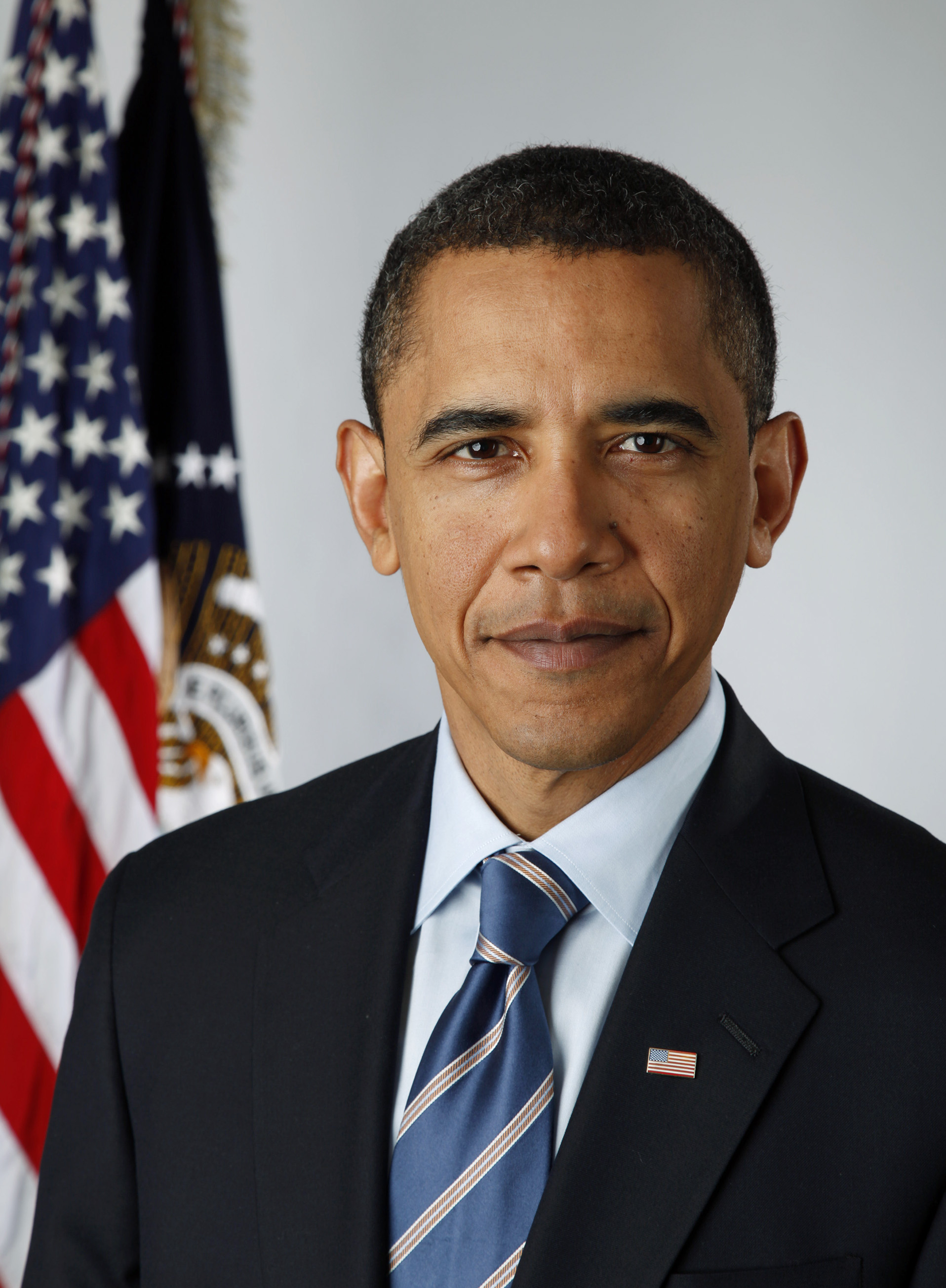
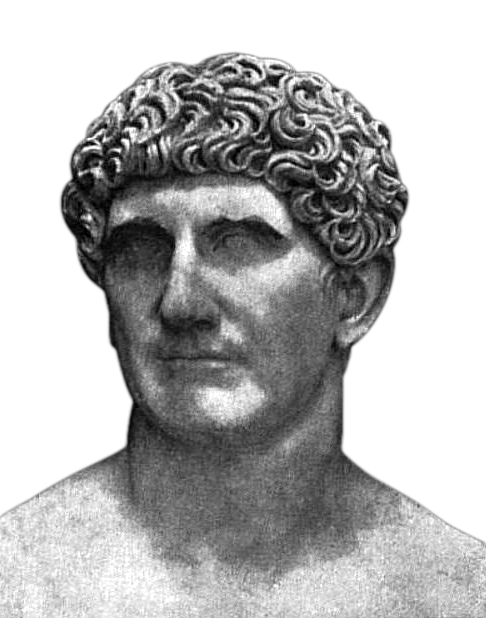
Is President Obama in any way similar to Mark Antony?
Is there an ironic gap between his public persona and his actual political agenda?
Let's read a bit about this deadline:
http://www.cleveland.com/open/index.ssf/2014/03/affordable_care_act_enrollment.html
Now, as you most likely know, President Obama recently appeared on the Funny or Die program, "Between Two Ferns," hosted by Zach Galifianakis of Hangover fame. Let's watch the interview.
http://www.youtube.com/watch?v=UnW3xkHxIEQ
Now, what is the President's purpose in doing this interview?
Is this the type of video that will appeal primarily to a younger demographic?
Is President Obama in any way similar to Mark Antony?
Is there an ironic gap between his public persona and his actual political agenda?
How many ages hence
Shall this our lofty scene be acted over
In states unborn and accents yet unknown!
Let's discuss.
Tuesday, March 11, 2014
The Inherent Irony of Antony's Speaking Persona
It [the body of Caesar] is, indeed, now a religious relic that is being displayed to call for its own intensity of responding feeling. The response comes in broken exclamations, which stand out against the wonderfully facile flow of what has gone before , and leads finally to the sinister call for death and revenge: "Revenge! About! Sack! Burn! Fire! Kill! Slay!" To the last Antony follows his method of inciting his hearers by disclaiming the very ends he has in mind. He begs them not to be stirred up to "such a sudden flow of mutiny." Caesar's assassins are beyond understanding of one who is, like those who hear him, "a plain blunt man,"
That love my friend: and that they know full well
That gave me public leave to speak of him. [III. ii.]
It is essential to the irony which prevails at this point that this, in part, is precisely what Antony is: though it is equally true that the conscious orator in him, in asserting this "plainness," is using it for calculated ends. His self-assumed part is that of one who has
neither, wit, not words, nor worth,
Action, nor utterance, nor the power of speech,
To stir men's blood, [III. ii.]
The aforementioned excerpt is from the essay, "A Clash of Aims: The Use and Abuse of Oratory by Brutus and Antony," by noted literary critic, Derek Traversi. What follows is the proper MLA citation for the book in which the essay appears:
Traversi, Derek. "A Clash of Aims: The Use and Abuse of Oratory by Brutus and Antony." Readings on Julius Caesar. Ed. Don Nardo. San Diego: Greenhaven Press, Inc., 1999. 131-137. Print.
To correctly cite the essay using MLA format, I checked Purdue University's Online Writing Lab. I searched for books, then found the sample for books containing multiple essays by multiple authors. Here is a link to the site: https://owl.english.purdue.edu/owl/resource/747/06/ Scroll down to the section titled, "A Work in an Anthology, Reference, or Collection" to see a sample citation.
I then used the following pages from the book to create the citation.


Now, to cite a quote or idea from the excerpt from the essay, you can simply mention the author and the essay by title. This is called an in-text citation (It is very necessary).
You can either mention the author and the essay:
That love my friend: and that they know full well
That gave me public leave to speak of him. [III. ii.]
It is essential to the irony which prevails at this point that this, in part, is precisely what Antony is: though it is equally true that the conscious orator in him, in asserting this "plainness," is using it for calculated ends. His self-assumed part is that of one who has
neither, wit, not words, nor worth,
Action, nor utterance, nor the power of speech,
To stir men's blood, [III. ii.]
The aforementioned excerpt is from the essay, "A Clash of Aims: The Use and Abuse of Oratory by Brutus and Antony," by noted literary critic, Derek Traversi. What follows is the proper MLA citation for the book in which the essay appears:
Traversi, Derek. "A Clash of Aims: The Use and Abuse of Oratory by Brutus and Antony." Readings on Julius Caesar. Ed. Don Nardo. San Diego: Greenhaven Press, Inc., 1999. 131-137. Print.
To correctly cite the essay using MLA format, I checked Purdue University's Online Writing Lab. I searched for books, then found the sample for books containing multiple essays by multiple authors. Here is a link to the site: https://owl.english.purdue.edu/owl/resource/747/06/ Scroll down to the section titled, "A Work in an Anthology, Reference, or Collection" to see a sample citation.
I then used the following pages from the book to create the citation.
Now, to cite a quote or idea from the excerpt from the essay, you can simply mention the author and the essay by title. This is called an in-text citation (It is very necessary).
You can either mention the author and the essay:
- In his essay, "A Clash of Aims: The Use and Abuse of Oratory by Brutus and Antony," literary critic Derek Traversi postulates... (136).
- Mark Antony adopts an ironic speaking persona (Traversi 136).
In this case, I feel that the first example is less awkward; plus, the mention of a published literary critic lends academic merit to your analysis.
***
Here's what I'd like you all to do:- Read the excerpt.
- Analyze the irony of Antony's speaking persona--what's ironic about Antony's funeral oration?
- Support your analysis with a quote from the essay (a proper in-text citation is required), and at least 2 quotes from the play itself (see p. 650-653); do not use any play quotes from the essay excerpt.
Monday, January 27, 2014
Midterm Vocabulary and Essay Prompt
Vocabulary
- Asperity (1)
- Doleful (1)
- Garish (1)
- Imbue (1)
- Undermine (1)
- Adjudicate (2)
- Countenance (2)
- Expedite (2)
- Implacable (2)
- Spurious (2)
- Curtail (3)
- Indignity (3)
- Malign (3)
- Rancor (3)
- Reparation (3)
- Adamant (4)
- Assiduous (4)
- Chary (4)
- Ephemeral (4)
- Ingratiate (4)
- Acrimony (5)
- Ambivalent (5)
- Engender (5)
- Exacerbate (5)
- Proselytize (5)
- Ameliorate (6)
- Baleful (6)
- Compunction (6)
- Circumvent (6)
- Euphemism (6)
- Castigate (7)
- Colloquial (7)
- Inter (7)
- Lacerate (7)
- Largesse (7)
- Adjacent (8)
- Beset (8)
- Cede (8)
- Circuitous (8)
- Desultory (8)
Midterm Expository Essay Prompt
All of the works we have covered this year deal with the conflict, "Man versus Society." This conflict has shaped the themes of The Crucible, Walden, Into Thin Air, Into the Wild, The Lord of the Flies, and Hell in the Pacific. Select any three of the aforementioned works and compare and contrast the theme of each, paying specific attention to the role the conflict "Man versus Society" plays in each.
Monday, January 6, 2014
Sunday, November 3, 2013
Tunes
To begin our readings and discussion on dark romanticism, I played some music I felt was particularly atmospheric. I selected a tune from the ambient, Canadian collective, Godspeed You Black Emperor: "East Hastings." Actually, it's a piece from a much longer "movement." Anyways, here it is in case you are interested in hearing it again.

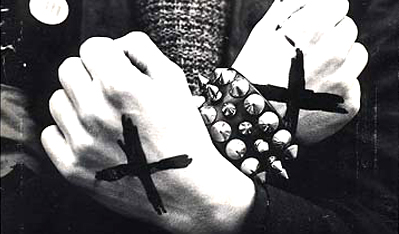
The other video showcased a performance by John Williams, arguably the greatest film composer of all time. In the video, he performed a Nikita Koshkin piece inspired by Poe's "The Fall of the House of Usher": "Usher Waltz, Op. 29."
To me, music and literature go hand-in-hand: both are expressive forms of art that are capable of creating atmosphere, changing the mood of a listener or a reader, and even broadening or radically altering one's understanding of the world.
To me, music and literature go hand-in-hand: both are expressive forms of art that are capable of creating atmosphere, changing the mood of a listener or a reader, and even broadening or radically altering one's understanding of the world.
To borrow a notion from Thoreau and other practitioners of civil disobedience, tension can promote positive change.
 |
| King subscribed to this belief. What more do you need to know? |
Thoreau was angered by slavery, consumerism, and greed, and he focused his energies in his writings and his own temporary retreat from society. His entire being came to represent a core of beliefs that can be generally described as transcendentalism.
Where are the Henry David Thoreau's now? In my opinion, they still exist, and they still use art to attract like-minded individuals.
The man holding the guitar is Ian Mackaye. He was the front-man for the influential D.C. hardcore band, Minor Threat. He later went on to form, Fugazi, a post-hardcore band known for their unflinching devotion to independence and DIY culture.
Ian, the son of a preacher, always subscribed to a set of strong beliefs. As a teenager, he and his band-mates in Minor Threat spread the ideals of Straight Edge, a movement that arose in reaction to the overly self-indulgent and self-destructive aspects of punk rock and rock and roll. Practitioners of Straight Edge focus on clean living and avoid drugs and alcohol completely.
Ian's political mindset also influenced the music that he made with Fugazi in the late 1980's up until the early 2000's. Here's one of my favorite Fugazi tunes, "Merchandise." Listen to the song and its lyrics. Is this transcendentalism for a new era?
When we have nothing left to give
There will be no reason for us to live
But when we have nothing left to lose
You will have nothing left to use
We owe you nothing you have no control
Merchandise keeps us in line
Common sense says it's by design
What could a businessman ever want more
than to have us sucking in his store
We owe you nothing
You have no control
You are not what you own
Monday, October 28, 2013
The Allegory of the Cave
In approximately 380 BC, Greek philosopher Plato wrote The Republic, a Socratic dialogue concerning justice and the role of man. The book contains Plato's theory of "forms," an idea based on the belief that "forms" or "ideas" possess a higher reality than the realm of physical sensation.
The "Allegory of the Cave" consists of a conversation between Plato's student, Socrates, and Plato's brother, Glaucon. In the conversation, Socrates describes a cave in which men are imprisoned and fooled by a false reality. Socrates uses the allegory to define the role of the philosopher in society. To Socrates and Plato, philosophers can perceive the true nature of reality.
The false reality in the cave consists of "shadows."
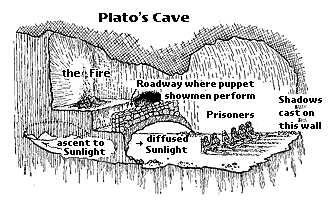

Men are kept like prisoners in the "dark," a state of false reality and deception. True reality exists above the cave, a land illuminated by the "sun," which represents the light of truth and higher reality.
 To free one's self from the "cave," one must rely upon one's intuition and spiritiuality and free one's self from a reliance on the senses, as physical reality can be manipulated and used to enslave one in state of perpetual ignorance.
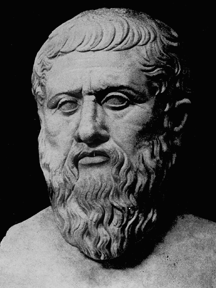

The "Allegory of the Cave" consists of a conversation between Plato's student, Socrates, and Plato's brother, Glaucon. In the conversation, Socrates describes a cave in which men are imprisoned and fooled by a false reality. Socrates uses the allegory to define the role of the philosopher in society. To Socrates and Plato, philosophers can perceive the true nature of reality.
The false reality in the cave consists of "shadows."
The "shadows" are manipulated by men in power.
Your Task: Imagine that Thoreau attempted to create his own version of the cave allegory to reflect the society and times in which he lived (mid-19th century America). Describe the cave of deception that Thoreau would imagine and post your explanation as a comment on this post.
- Due by midnight, Wed. 10/30.
Subscribe to:
Posts (Atom)